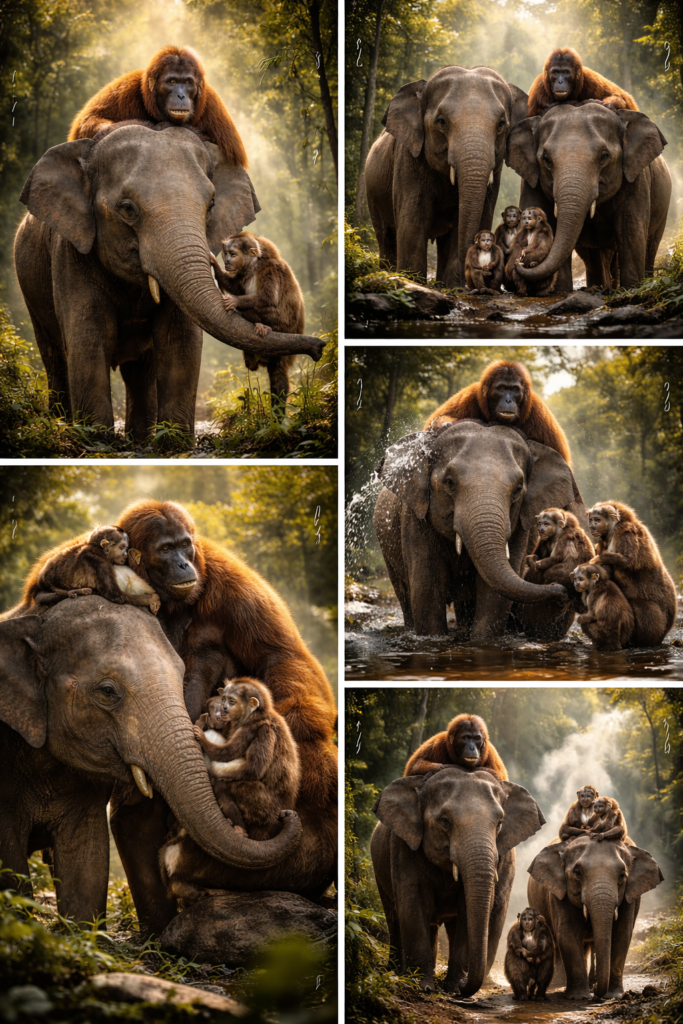
In biological and ecological terms, elephants and monkeys represent two of the most socially complex and intelligent groups of mammals on Earth. While they belong to different taxonomic orders (Proboscidea for elephants and Primates for monkeys), they share remarkable cognitive traits and ecosystem-engineering roles.
In biological and ecological terms, elephants and monkeys represent two of the most socially complex and intelligent groups of mammals on Earth. While they belong to different taxonomic orders (Proboscidea for elephants and Primates for monkeys), they share remarkable cognitive traits and ecosystem-engineering roles.
🐘 The Elephant (Order: Proboscidea)
Elephants are the largest living land animals. There are three officially recognized species: the African Savanna (Loxodonta africana), the African Forest (Loxodonta cyclotis), and the Asian (Elephas maximus).
1. Biological Specializations
- The Trunk: A fusion of the upper lip and nose, containing roughly 150,000 muscle fascicles. It is capable of lifting 250 kg while maintaining the dexterity to pick up a single blade of grass.
- Cognition & Memory: Elephants have the largest brain of any land mammal (up to 6.5 kg). Their temporal lobe (associated with memory) is denser than a human’s, allowing them to remember water locations and social connections across decades.
- Senses: They are specialists in infrasound—low-frequency sounds below the range of human hearing—that can travel up to 14 km. They also detect seismic vibrations through their feet.
- Tusks: These are actually oversized incisor teeth that grow throughout their lives.
2. Ecological Role
Elephants are keystone species and “ecosystem engineers.” They create forest clearings that allow light to reach the floor, dig water holes that other animals use, and disperse seeds that require an elephant’s digestive tract to germinate.
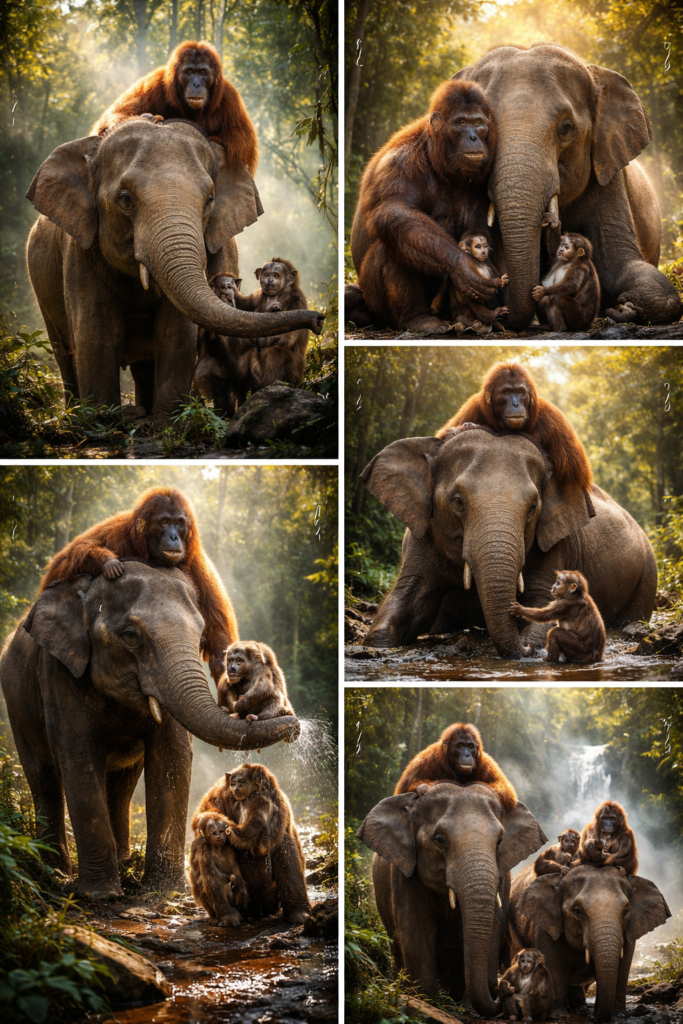
🐒 The Monkey (Order: Primates)
“Monkey” is a broad term for roughly 260 species of tailed primates, excluding apes (like chimps or humans), lemurs, and tarsiers. They are split into two major official groups based on geography and anatomy.